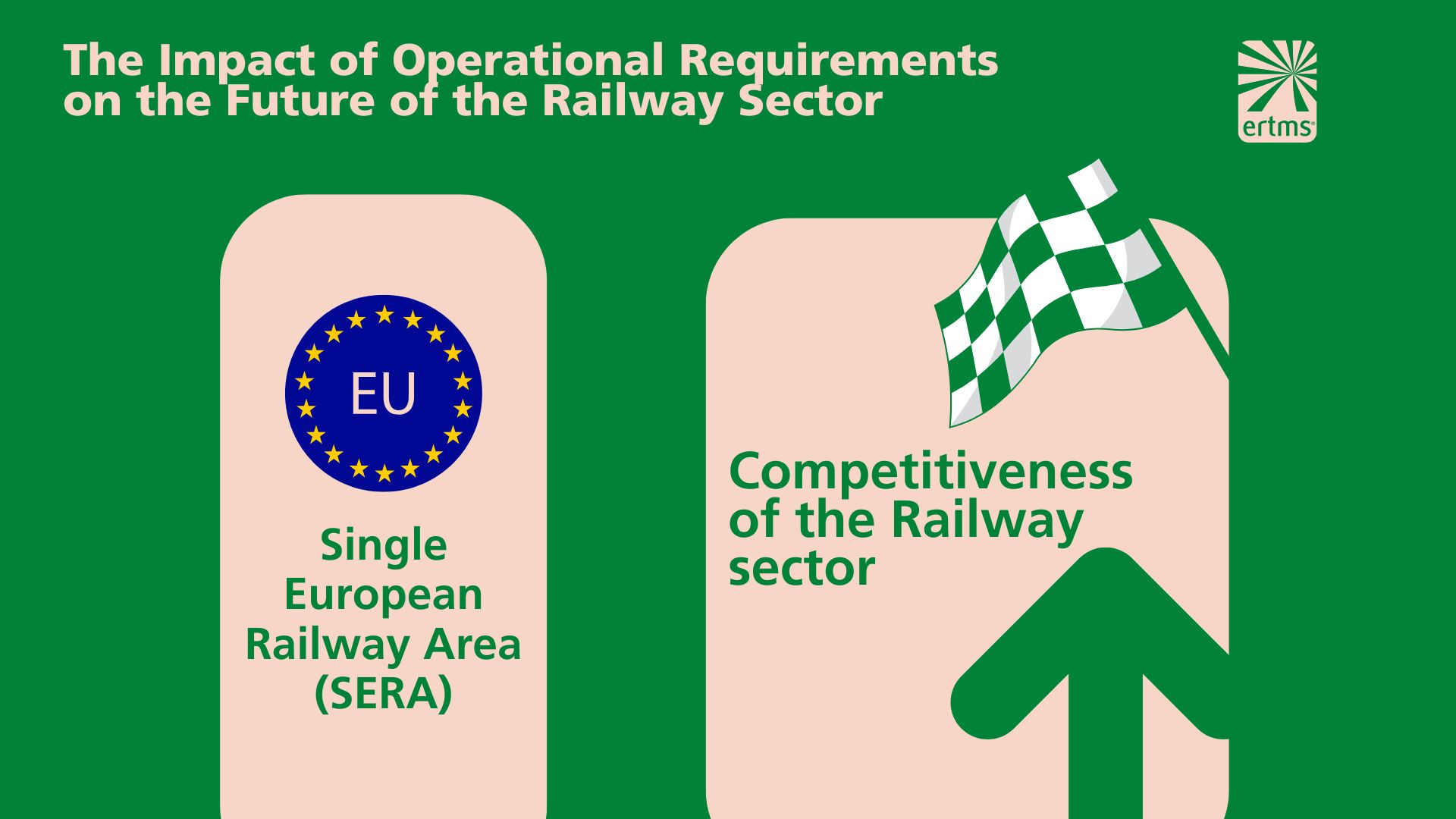
Are you aware of the impact that Operational Requirements have on the future of the European rail sector?
Did you know that “differences in operation are one of the key root causes for complexity and product fragmentation, which are major cost drivers”?
Let us take a closer look:
European railways continue to be strongly shaped by national requirements and conditions, which makes harmonisation particularly challenging. Although common telecommunications and signalling technologies exist, the organisation and management of rail operations remain largely national. Previous European efforts to harmonise operations have encountered significant obstacles. A harmonised, Europe-wide approach could enable the standardisation of technical solutions, ultimately resulting in a more efficient and higher-performing railway system.
In the current landscape, the wide range of operational requirements leads to fragmented and limited markets, increased costs, and slow adoption of innovations. This situation affects all stakeholders, including Infrastructure Managers, railway undertakings, and suppliers.
The optimal scenario would establish a single European requirements baseline, allowing suppliers to serve the entire European market. This would also free capacity for faster innovation cycles, thereby improving the overall competitiveness of rail transport.
Common Business Objectives
Railways and suppliers have agreed to collaborate in addressing these challenges, identifying three principal Common Business Objectives:
- Cost Efficiency — achieved through harmonisation of operations; simplification of regulations and procedures; standardisation of acceptance processes and architectures; efficient system integration, testing, and validation; and affordable software upgrades.
- Quick Adaptation and Deployment — enabled by increased flexibility, reduced time-to-market, streamlined procurement, and effective migration strategies.
- Better Performance — reflected in increased capacity, enhanced reliability and availability, and improved environmental sustainability.
The impact of operational requirements on the future of the European railway sector
Currently, there are at least 100 substantially different baselines for signalling solutions across Europe.
These baselines influence not only development, approval, and certification costs but also necessitate extensive in-house and field testing. Such field testing can extend project implementation timelines, occupy infrastructure, and require vehicles configured for specific conditions.
The System Pillar of Europe’s Rail Joint Undertaking (ERJU SP) places the harmonisation of operations at the forefront of its agenda.
Read more in UNIFE’s UNISIG Committee position paper here